
AI Receptionist vs Traditional Receptionist: Which Is Better for Automotive Workshops?
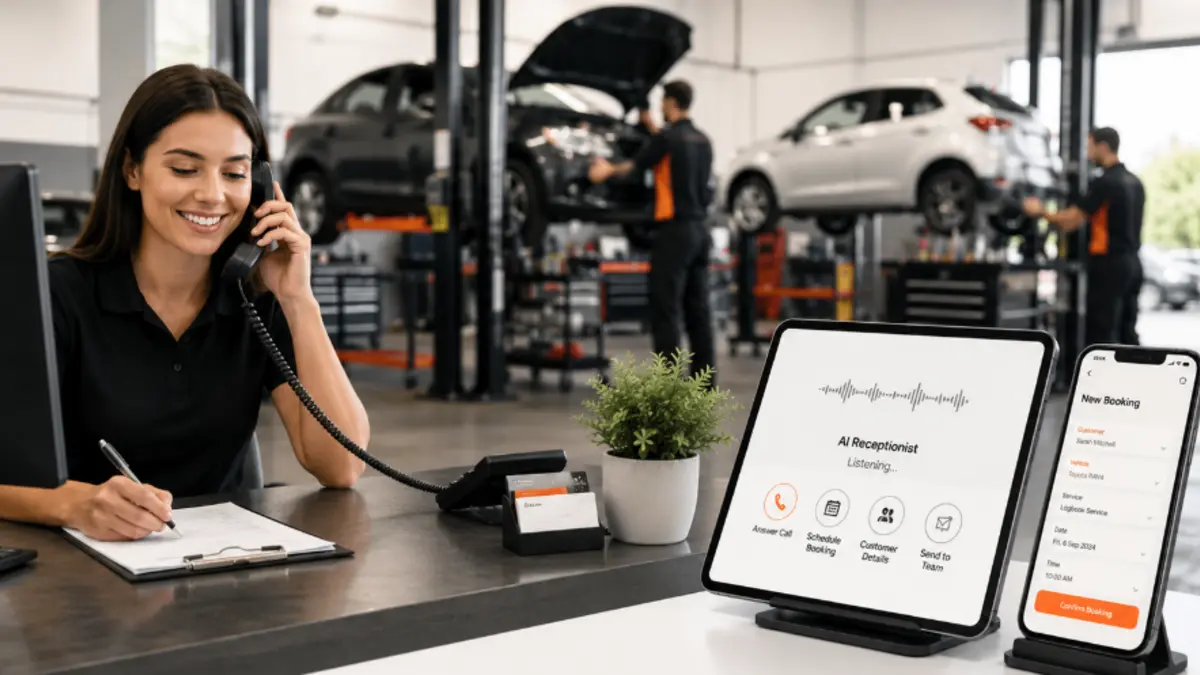
For most automotive workshops, the real question is not whether AI should replace a receptionist. A better question is which calls AI should handle, and which conversations still need a person.
A receptionist might be helping a customer at the counter, speaking with a parts supplier or preparing an invoice when another call comes in. An AI receptionist can add phone coverage without pulling the front-desk team away from the customer already in front of them.
This comparison looks at the practical differences: cost, availability, multiple-call handling, appointment booking and human interaction.
What Does a Traditional Receptionist Do?
A traditional receptionist does much more than answer the phone. In a workshop, they may greet customers at the front desk, collect customer and vehicle details, understand service enquiries, check the schedule and arrange appointments. They may also handle payments, supplier calls and general administration.
Human judgement is the big strength. A receptionist can hear when a customer is upset, ask a mechanic for advice, explain a repair in plain language and decide when a situation needs careful handling. That personal judgement is hard to replace.
What Does an AI Receptionist Do?
An AI receptionist can answer incoming calls, give basic information about opening hours and services, collect the customer’s name and phone number, record vehicle details and understand the basic reason for the call. For routine appointment requests, it can check availability through a connected calendar or booking system and send the booking information to the workshop.
When configured, it can send SMS confirmations and transfer complex calls to a human team member. The exact capabilities depend on how the system is set up and which tools are connected. You can explore the available AI receptionist services if you want to see how this fits into a workshop process.
AI Receptionist vs Traditional Receptionist
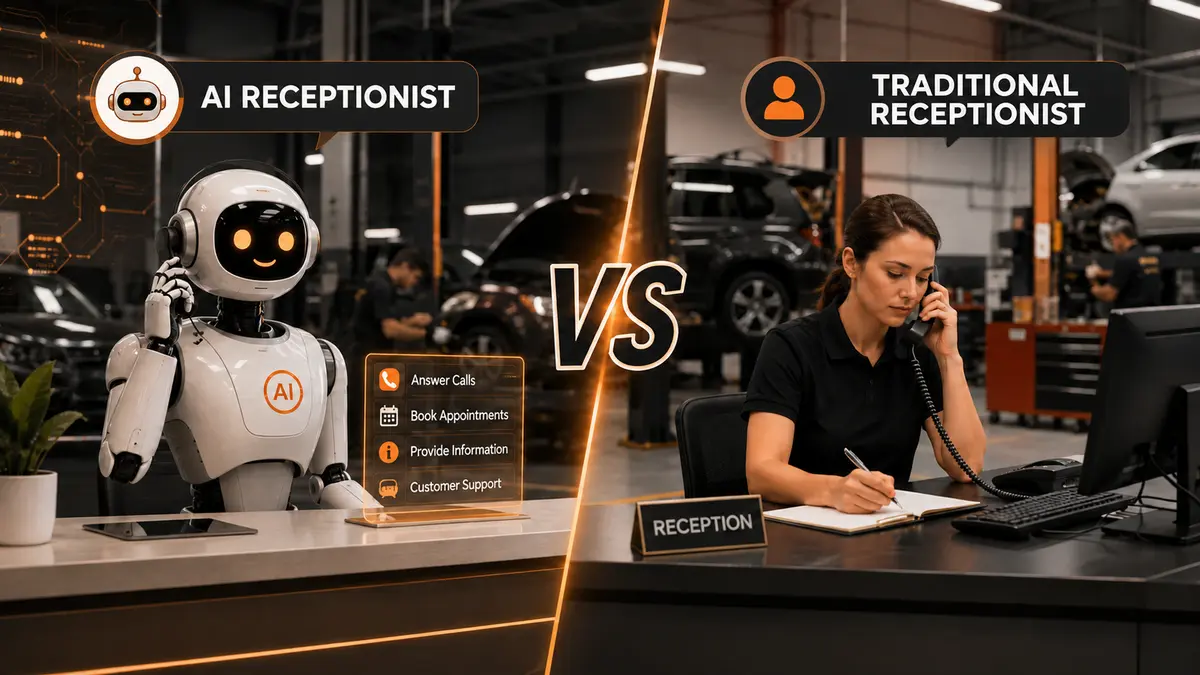
| Feature | Traditional Receptionist | AI Receptionist |
|---|---|---|
| Cost | Salary or hourly wages, leave, training and other employment-related costs. | Usually includes setup and an ongoing monthly plan based on features and call usage. |
| Availability | Available during scheduled working hours, except during breaks, leave or other duties. | Can answer calls 24/7 when configured for full-time coverage. |
| After-hours calls | Usually unavailable after the workshop closes. | Can answer routine calls and capture enquiries outside normal working hours. |
| Multiple calls | Usually handles one phone conversation at a time. | Can handle simultaneous calls, depending on the system configuration. |
| Appointment booking | Can understand more complex situations and manually manage the workshop schedule. | Can check a connected calendar and handle routine booking requests. |
| Human interaction | Provides empathy, personal interaction and human judgement. | Best suited to routine enquiries and can transfer complex calls to staff. |
Cost
A traditional receptionist is an employee. Their value often goes beyond phone calls because they may help with customers at the counter, payments, suppliers and admin. That wider role matters when the front desk is a busy part of the workshop.
An AI receptionist normally has an initial setup cost and an ongoing monthly cost. The total can depend on call minutes, integrations and how detailed the call flow needs to be. A lower monthly cost does not automatically make AI the better choice for every workshop, but it can be useful where phone coverage is the main pressure point. See AI receptionist pricing for the current plan structure.
Availability
Human receptionists work scheduled hours. Even during the day, they can become unavailable while helping a customer, taking a break, chasing a part or finishing paperwork.
An AI receptionist can provide after-hours answering, weekend coverage, overflow coverage and support when the front desk is already busy. Those options depend on the configuration, so it is worth being clear about when the AI should answer and when calls should go to staff.
Handling Multiple Calls
A receptionist may already be speaking to one customer when a second person calls to ask about a service or appointment. That second caller may be placed on hold or sent to voicemail. In a busy workshop, that can happen during drop-off, lunch breaks or late afternoon pick-ups.
An AI receptionist can provide overflow support or handle multiple routine enquiries at the same time, depending on the phone setup. The goal is not perfect performance. It is to reduce missed enquiries and make sure more callers are at least greeted, understood and recorded.
Appointment Booking
A human receptionist is stronger when the booking is not straightforward. They can ask follow-up questions, check with a mechanic and make judgement calls when a customer is unsure what is wrong with the vehicle.
A properly connected AI receptionist can collect the customer’s name and phone number, record basic vehicle details, identify the requested service, check available times, submit or confirm a routine appointment request and send confirmation information. Complex repairs, uncertain service requirements and urgent situations may still need human review.
Human Interaction
Traditional receptionists are stronger when a customer has a complaint, is upset or confused, needs a detailed explanation, has an unusual request, is standing at the counter or needs a decision that requires human judgement.
AI is better suited to consistent routine enquiries. If the caller needs human help, the system should transfer the call or take a detailed message for the workshop team.
When Does an AI Receptionist Make Sense for Your Workshop?
An AI receptionist starts to make sense when phone calls are interrupting the team or slipping through the cracks.
- Calls are frequently missed during busy workshop hours.
- Customers call after the workshop has closed.
- Several customers may call at the same time.
- Staff spend too much time answering routine questions.
- Appointment requests are delayed.
- The front-desk team needs overflow call coverage.
- The workshop wants booking confirmations and call summaries.
A workshop receiving only a few manageable calls may not need a full AI receptionist. The service becomes more useful when missed calls, after-hours enquiries or high call volume are creating lost opportunities or interrupting the team. We covered this in more detail in how an AI receptionist can help automotive workshops win more bookings.
When Is a Human Receptionist Still Essential?
Human staff remain important for customers who visit the workshop, complaints and sensitive conversations, complicated vehicle problems, unusual pricing or service decisions, supplier coordination and situations that need empathy or judgement.
This is why AI should be treated as support for the front desk, not as a blanket replacement for every customer conversation.
Can AI and Human Receptionists Work Together?
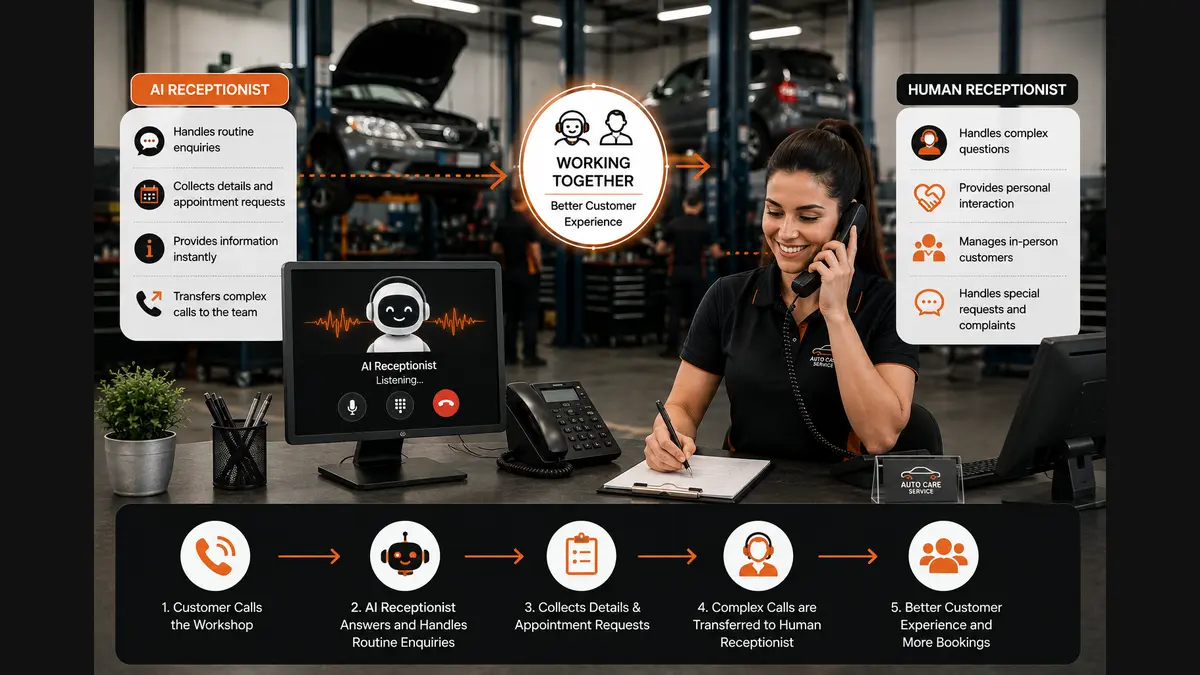
For many workshops, the best setup is shared coverage. The AI answers routine calls and captures details, while human staff handle the conversations that need care.
- A customer calls the workshop.
- The AI receptionist answers and identifies the reason for the call.
- It handles routine questions or collects appointment information.
- If the call is complex, it transfers the customer or sends the details to the workshop team.
- Human staff handle complaints, unusual requests and decisions requiring judgement.
This approach lets the front-desk team focus on customers and important workshop tasks while routine calls are still answered.
Which Option Is Better for Your Workshop?
A traditional receptionist is better for complex conversations, in-person service and situations that require empathy or judgement. An AI receptionist is better suited to routine calls, after-hours coverage, overflow calls and straightforward appointment requests.
For many busy automotive workshops, the strongest approach is to use both together. Smaller workshops should make the decision based on actual call volume, missed calls and the pressure phone calls place on daily operations.
Frequently Asked Questions
Can an AI receptionist replace a traditional receptionist?
It is generally more useful as additional phone coverage. It can handle routine calls while human staff manage complex conversations and customers at the workshop.
Can an AI receptionist answer workshop calls after hours?
Yes, when configured for 24/7 coverage. It can answer common questions, collect details and record appointment requests after the workshop has closed.
Can an AI receptionist book automotive service appointments?
Yes, when connected to an appropriate calendar or booking system. Complex service requirements may still need confirmation from workshop staff.
Can callers speak to a human?
Yes. The system can transfer selected calls or collect the caller’s details for a team member to return the call, depending on the configuration.
Is an AI receptionist suitable for a small workshop?
It depends on call volume and how often calls are missed. A small workshop with manageable call numbers may not need it, while a small but busy workshop may benefit from overflow or after-hours coverage.
See How an AI Receptionist Would Work for Your Workshop
AgenticSole helps automotive workshops answer calls, capture enquiries and manage appointment requests without adding more pressure to the front-desk team. Book a demonstration to hear how an AI receptionist could handle real workshop calls.
We will discuss your call flow, booking process and the situations your team would prefer to handle personally.